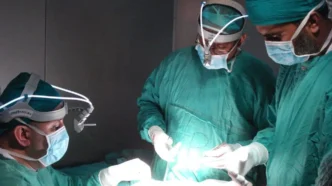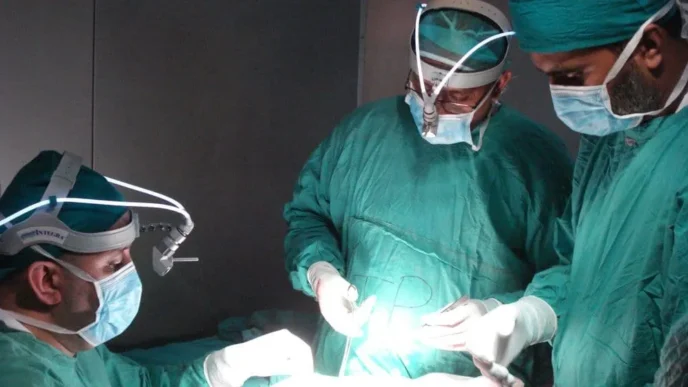


Two junior doctors at Jinnah Hospital in Karachi have developed symptoms consistent with the Congo virus after recently attending to an infected patient, hospital insiders revealed.
Sources indicate that the doctors were involved in the care of a patient who was later transferred to the Sindh Infectious Diseases Hospital, where they tragically passed away on June 19.
According to Dr. Shahid Rasool, the hospital’s Executive Director, both doctors began experiencing high fevers and abdominal pain shortly after treating the patient. One has been placed under home isolation, while the other is currently admitted to the hospital’s Medical ICU.
Dr. Rasool noted that one of the doctors is displaying almost all typical symptoms of the Congo virus, with signs emerging just one day after patient exposure. PCR test samples have been sent for confirmation, with results expected by Monday.
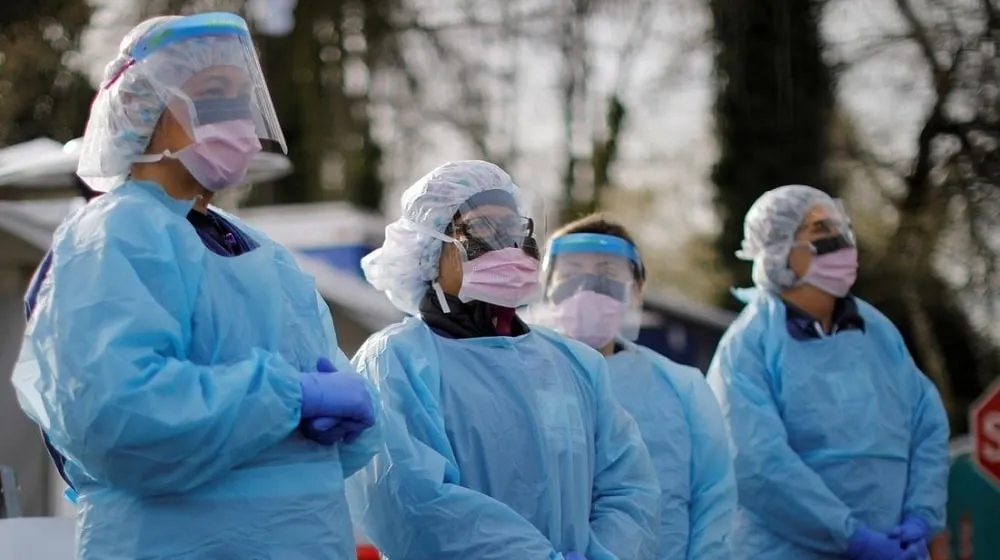
In response, a fever screening station has been set up in the hospital’s emergency department. However, Dr. Rasool acknowledged that the facility does not currently have the capacity to establish a dedicated isolation unit. Any further steps, including the creation of isolation areas, will depend on instructions from the provincial health authorities.
Karachi’s hospitals are absorbing more than one outbreak at once — the same wards have also been stretched by the city’s dengue surge this season.
Our Opinion
Two doctors falling ill after treating a Congo virus patient who did not survive is a stark reminder of how much frontline healthcare workers absorb risk that the rest of the health system is built to avoid, and the hospital’s own admission that it lacks the capacity for a dedicated isolation unit is the kind of gap that shouldn’t need a scare like this one to surface. Provincial health authorities have a clear opening here to fund proper isolation capacity before the next exposure, rather than after.