
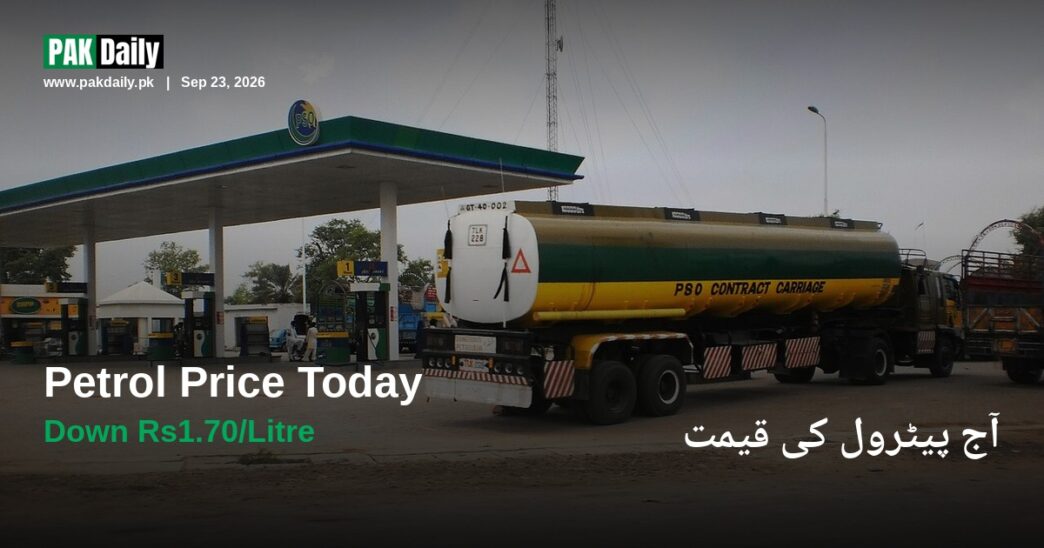
The government has cut petrol prices by Rs1.70 per litre and high-speed diesel (HSD) by Rs3.12 per litre for the next fortnight, bringing petrol down to Rs392.05 per litre and diesel to Rs418.96 per litre, effective Wednesday, September 23, 2026. The revision, announced by the Petroleum Division late on September 22 under the Oil and Gas Regulatory Authority (OGRA)’s pricing formula, marks a reversal after petrol and diesel had been climbing steadily through much of September.
| Fuel | Previous Price (per litre) | New Price (per litre) | Change |
|---|---|---|---|
| Petrol (Motor Spirit) | Rs393.75 | Rs392.05 | -Rs1.70 |
| High-Speed Diesel (HSD) | Rs422.08 | Rs418.96 | -Rs3.12 |
According to Business Recorder, the Petroleum Division cited “global developments, including changes in Platts rates, premiums and incidentals” as the reason for the adjustment. Dawn reported that international crude slipped to two-week lows this week, with Brent’s November contract trading around $98.23 a barrel, as fears of a wider Gulf supply disruption eased. Iran has signalled it could reopen the Strait of Hormuz within a week, while Saudi Arabia is reportedly preparing to resume oil exports through its Red Sea ports — both developments that markets read as reducing the risk of a prolonged Middle East supply squeeze that had been pushing prices higher since the US-Iran conflict flared up in late February.
Both products remain well below their 2026 peak: HSD touched Rs520.35 per litre and petrol Rs458.41 per litre on April 3, according to Dawn, before easing over the following months. Petrol still carries roughly Rs114 per litre in taxes and levies, and diesel about Rs100 per litre, under the government’s existing tax structure — meaning today’s cut reflects a dip in the landed cost of fuel rather than any change in the tax burden itself.
Pakistan moved to a daily/fortnightly review cycle for fuel pricing in July, tying pump prices more closely to international benchmarks so that both increases and decreases are passed on to consumers faster than under the older twice-a-month system. Petrol is the fuel most directly felt by motorcyclists, rickshaw drivers and private car owners, while diesel prices ripple through freight, agriculture and public transport costs and, by extension, the price of everyday goods. Combined monthly sales of the two fuels run to roughly 700,000-800,000 tonnes nationwide, according to Dawn’s reporting, underlining how even a modest per-litre move affects household budgets across the country.