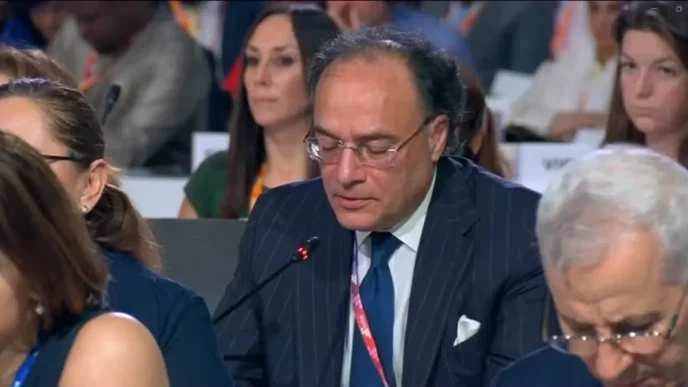

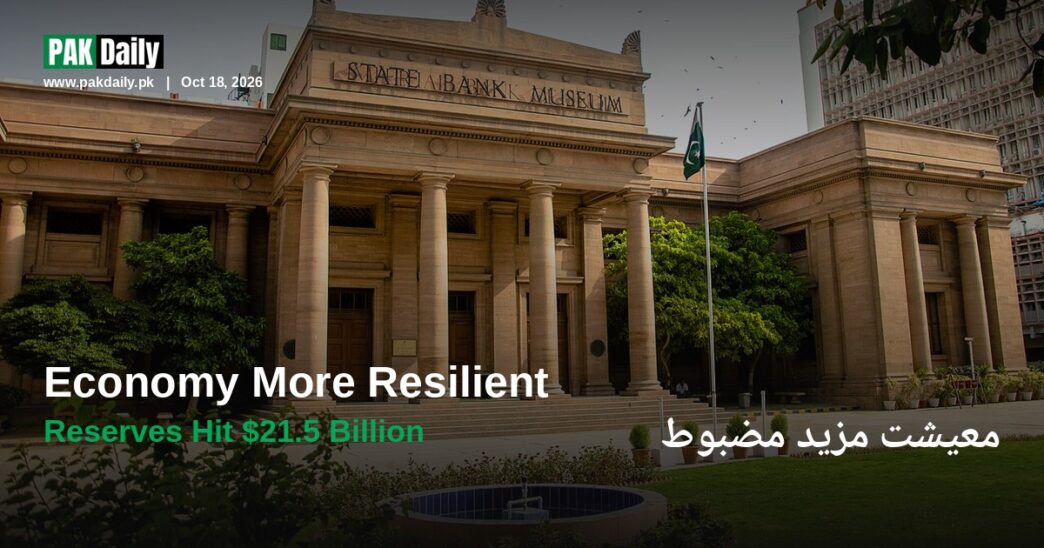
Pakistan’s economy has become markedly more resilient to domestic and external shocks, State Bank of Pakistan (SBP) Governor Jameel Ahmad told global investors on the sidelines of the IMF-World Bank Annual Meetings in Bangkok, Thailand, pointing to a sharp rebuild in foreign exchange reserves and a return to steady growth after the 2023 balance-of-payments crisis.
In meetings held between October 12 and 17 with senior executives from JP Morgan, Citibank, Jefferies, Deutsche Bank, Barclays, Bank of America, Standard Chartered, MSCI and Mitsubishi UFJ Financial Group, along with global credit rating agencies and bilateral and multilateral partners, Ahmad said sustained macroeconomic policies and structural reforms had put the country in a far stronger position than during previous shocks, according to an SBP statement reported by Dawn and corroborated by Business Recorder and Daily Times.
Pakistan is now “in a significantly better position to withstand the latest shock” than in previous periods of external stress, Ahmad told investors, according to Business Recorder.
The improvement shows up across almost every indicator the central bank tracks. Official foreign exchange reserves, which had fallen below $3 billion in February 2023 at the height of the crisis, stood at $21.5 billion as of October 9, 2026 — a recovery Ahmad credited mainly to the SBP’s own dollar purchases in the interbank market, helped along by regulatory reforms for exchange companies and a push to route remittances through formal banking channels.
| Indicator | FY23 (crisis low) | FY26 (latest) | FY27 (projected) |
|---|---|---|---|
| Foreign exchange reserves | Below $3bn (Feb 2023) | $21.5bn (Oct 9, 2026) | — |
| SBP forward liabilities | Over $5.7bn | Under $1bn | — |
| GDP growth | Contraction | 3.7% | 3.5%–4.5% |
| Current account balance | Large deficit | Nearly balanced | Deficit of 0%–1% of GDP |
| Primary fiscal balance | Deficit | 3rd straight annual surplus | — |
Inflation, Ahmad said, has fallen sharply from the elevated levels of FY23 to near the central bank’s target range in FY26, even after the economy absorbed a significant oil price shock — a trend PakDaily tracked in detail when September’s inflation reading eased to 10.3 percent. On the external front, the governor also pointed to continued IMF engagement as a marker of reform momentum, weeks after Islamabad and the Fund struck a staff-level agreement on the next $1.2 billion tranche.
Ahmad said the reform push has already fed through into investor confidence, pointing to sovereign credit rating upgrades and renewed access to international capital markets despite a difficult global backdrop, including Middle East tensions that have kept oil and freight costs elevated. He added that the public debt-to-GDP ratio continues to decline, though the SBP statement did not release specific debt figures.
Our Opinion
Ahmad’s numbers are real, and the turnaround from the 2023 near-default scare is not in dispute; but the governor’s pitch to bankers in Bangkok leans heavily on central bank dollar-buying and IMF-anchored discipline rather than on exports or private investment actually picking up, so a reserve cushion built largely through purchases rather than a durable current account surplus is a buffer against the next shock, not proof that the underlying growth model has changed — the real test will be whether Pakistan can sustain 3.5–4.5 percent growth and keep inflation anchored once IMF reviews stop forcing the pace of reform.