
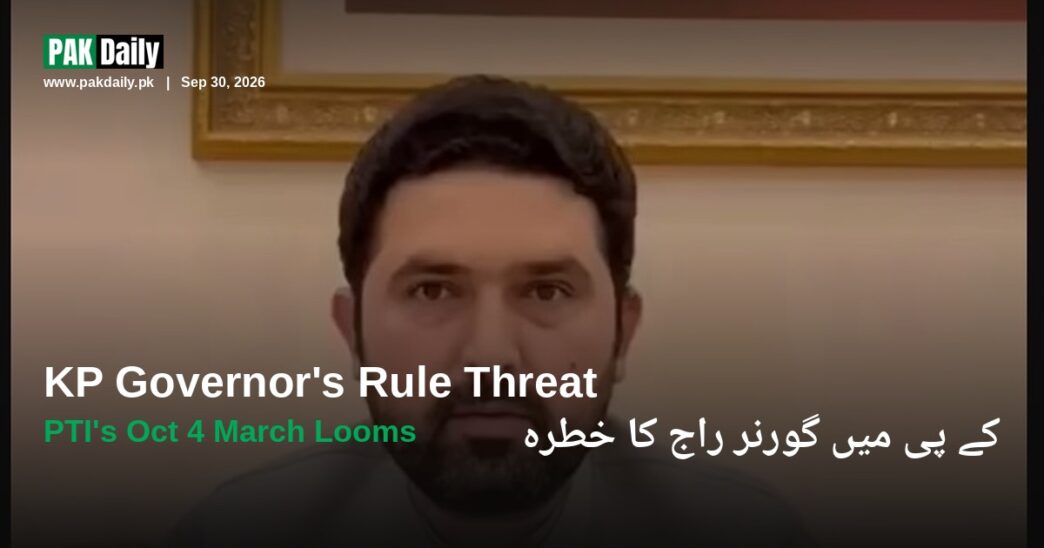
The standoff between the federal government and Khyber Pakhtunkhwa’s PTI-led provincial administration sharpened on Tuesday, with senior federal officials openly floating governor’s rule or a state of emergency in KP just days before PTI’s planned October 4 march on Islamabad.
Adviser to the Prime Minister Rana Sanaullah said an emergency “may be imposed” if PTI protesters reach Islamabad on October 4, adding that “options of governor’s rule, emergency and talks remain on the table,” according to Samaa TV. He accused the KP government of obstructing federal counter-terrorism efforts, claiming militants were crossing into the province from Afghanistan and targeting major cities, and said a “final decision on all options would be taken after the prime minister’s return.”
Law Minister Azam Nazeer Tarar and KP Governor Faisal Karim Kundi have both said in recent days that governor’s rule or emergency measures remain constitutionally available “if required,” Dawn reported. Kundi, a PPP leader who would have to implement any presidential order imposing governor’s rule, urged the provincial government to avoid the kind of security breakdown that could trigger it, while confirming he would carry out such an order if issued.
“An emergency may be imposed if PTI reaches Islamabad on October 4,” Rana Sanaullah said, warning that the government would use “whatever force was required” if the march went ahead as planned.
KP Chief Minister Sohail Afridi has so far refused to back down. He said the march would proceed in phases, with participants first gathering in Swabi near the Punjab border before advancing toward the capital, and described the planned demonstration as “unmatched in the country’s history,” according to Dawn. Afridi warned the Centre against any “adventure” against his government and said KP’s security challenges required local solutions rather than federal takeover.
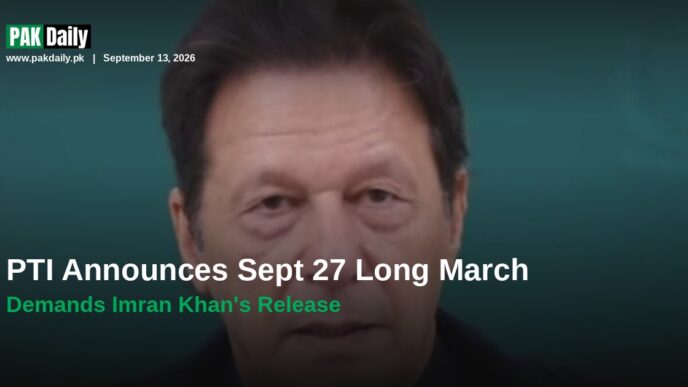
The march itself is not new — PTI had originally planned to march on September 27 before postponing the date to October 4, and it has demanded Imran Khan’s release as its central goal throughout. Sanaullah reiterated on Tuesday that the PTI founder’s release “could only come through the courts,” and again asked the party to postpone the march, saying Prime Minister Shehbaz Sharif remained open to talks with opposition leaders.
Federal officials have laid out essentially three paths forward:
- Governor’s rule — imposed on the governor’s recommendation if the provincial government is deemed to have failed, as PPP Secretary General Nayyar Bukhari noted the constitution allows.
- A state of emergency — cited by both Tarar and Sanaullah as an option “if required,” tied to the security situation in KP.
- Negotiations — repeatedly floated by Sanaullah and the PPP as the preferred route, with an All Parties Conference also under discussion.
The PPP, a key coalition partner whose support would matter for any move against the KP government, signalled on Tuesday it was open to governor’s rule but preferred dialogue. Bukhari said the party would offer “constitutional recommendations if consulted” by the federal government and described KP as facing the “worst” law-and-order situation in the country, according to Geo News. He also questioned why PTI leaders had not attended funerals of terrorism victims in the province, suggesting their focus remained on Imran Khan’s release rather than public welfare — a charge PTI has consistently rejected. Bukhari added that “national matters can only be resolved through negotiations” and said PPP would decide on attending any APC after its central executive committee reviews the situation.
Not everyone in the ruling coalition is on the same page: PML-N’s Atta Tarar separately described talk of governor’s rule or emergency in KP as “premature,” pointing to a lack of consensus within the federal government itself on how far to take the confrontation.
With four days left before the planned march, neither side has publicly blinked. Afridi’s provincial government says it will “protect its mandate,” while the Centre says a final call will follow Shehbaz Sharif’s return from abroad — leaving the question of whether Pakistan heads toward a constitutional showdown, a negotiated de-escalation, or another postponement unresolved for now.
Our Opinion
Threatening governor’s rule over a province whose government you disagree with politically is a serious constitutional step, not a bargaining chip, and floating it publicly — repeatedly, and with visible disagreement even within the ruling coalition over whether it is “premature” — risks normalising a tool that should be reserved for genuine, demonstrable breakdowns in provincial administration rather than used as leverage against an opposition-run province ahead of a protest march. Both sides have legitimate points: the federal government’s concerns about cross-border militancy in KP are real and well-documented, but so is PTI’s constitutional right to organise a peaceful march, and neither justifies escalating rhetoric that edges toward a federal-provincial crisis. The wiser course, one that PPP itself seems to be nudging toward, is talks before ultimatums; whichever side finally moves first on that will have done more for the country than winning this particular standoff.